If you’re new to racing pigeons, one of the best skills you can learn isn’t training or timing feed. It’s knowing when a bird is “right” and when something is slightly off.
Most problems first show up as small changes. A pigeon rarely goes from perfect to poorly overnight. If you get used to handling your birds and watching their behaviour, you’ll spot those early signs sooner and address them before they become bigger issues.
Why regular checks matter
Racing pigeons are good at masking issues. In a loft setting, a bird may still trap, still eat, and still look fine at a glance while something is brewing underneath. Regular checks help you notice trends, not just obvious illness.
The aim isn’t to obsess or over-handle the birds. It’s to build a routine where you can confidently say, “Yes, this bird feels right,” or “Something has changed, I need to keep an eye on it.”
What a healthy pigeon looks like in the loft
Before you even pick a bird up, you can learn a lot from how it behaves.
A healthy pigeon usually:
- Looks alert and aware of what’s going on
- Stands and moves with confidence
- Has a tidy appearance with well-kept feathers
- Eats normally and drinks normally
- Breathes quietly with no effort
- Interacts with the loft in a normal way
What you’re watching for is not one dramatic symptom, but small changes in energy, posture, and routine.
Handling checks
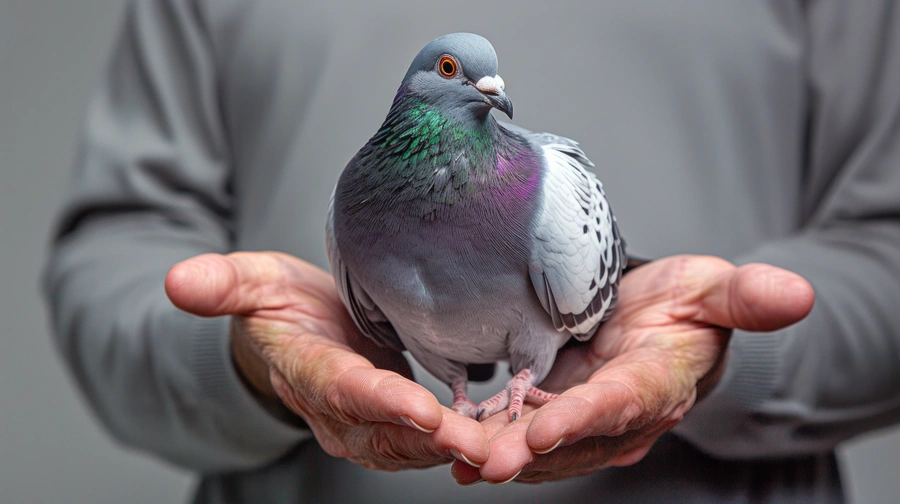
Handling is one of the quickest ways to spot small changes early, especially once you know what your birds normally feel like. You don’t need to overdo it; a calm, consistent check is often enough to pick up on condition shifts before they show in behaviour.
What to feel for when you pick a pigeon up
Handling tells you things you can’t see. You’re checking condition, hydration, breathing and general “feel”. It’s also how many fanciers spot early problems long before a bird looks unwell.
Pick the bird up calmly and support it properly. If you’re new to handling, keep it brief and gentle. A quick, consistent check is better than a long, stressful one.
Weight and overall condition
A bird should feel balanced and in good order, not heavy and soft, and not sharp and light.
Things to watch:
- Sudden weight loss over a short period
- Birds that feel “puffy” and heavy without muscle tone
- Uneven condition compared with other birds in the same section
If you feel a change, don’t guess. Compare to how the bird normally feels.
The breast muscle
The breast should feel firm and well-filled for a bird in good condition. If it feels flat or the bird feels sharp, it can be a sign that their condition is dropping.
You’re looking for:
- Good muscle tone
- Evenness on both sides
- No sudden dip in fullness
This isn’t about perfection. It’s about noticing change.
The keel and “sharpness”
The keel is the bone running down the centre of the chest. You’ll always be able to feel it, but it shouldn’t feel overly prominent.
If the keel feels much sharper than usual, it can be a sign the bird isn’t holding condition as it normally would.
Hydration
A simple way to gauge hydration is to check the skin and the bird’s overall feel. A well-hydrated bird usually feels supple, not dry or tight.
Dehydration can show up as:
- Dullness
- Poorer feather condition
- Reduced appetite
- Birds not recovering as expected
If you suspect dehydration, think about water quality, heat, stress, and whether the bird is drinking normally.
Breathing in the hand
When you hold a pigeon, pay attention to its breathing. Healthy breathing should be quiet and steady.
Red flags include:
- Audible clicking or wheezing
- Open-mouth breathing
- Obvious effort in the chest
- Tail bobbing with each breath
If you spot these signs, it’s worth separating the bird and seeking advice rather than hoping it will pass.
The vent area and droppings
You don’t need to be overclinical, but it’s worth keeping an eye on cleanliness and droppings.
Look out for:
- Messy feathers around the vent
- Unusually watery droppings
- Droppings that look very different from what’s normal in your loft
One odd dropping isn’t usually a crisis. A consistent change over time is more important.
Behaviour checks
Behaviour can tell you a lot before anything looks “wrong” physically. Once you know what your pigeons normally do at different times of day, small changes stand out quickly. That’s why watching how they act in the loft is just as useful as checking them in the hand.
Signs that something is not quite right
Behaviour is often the earliest clue. Birds that are “off” might not look obviously ill, but they don’t act like themselves.
Common warning signs include:
- Sitting fluffed up for longer than usual
- Isolating themselves or avoiding the group
- Reluctance to fly or move
- Slower trapping than normal
- Less interest in loft routine
- Reduced appetite or hanging back at feeding
If you notice one of these, watch closely. If you notice two or three together, take it seriously.
The quickest way to spot problems early
A simple habit that helps is a short daily scan:
- Watch the loft for a minute before you do anything
- Note who looks slightly different
- Handle one or two birds briefly each day, rotating through the team
Over time, you’ll build a clear picture of what “normal” looks like for your loft, which is the best tool you can have.
When to act
If a bird is clearly unwell, isolate it and seek advice. If you’re seeing smaller changes, the best approach is usually:
- Watch the bird closely for 24 to 48 hours
- Compare it with other birds in the same section
- Avoid racing or hard work until you’re confident it’s right
Rushing a bird that isn’t right rarely ends well.
You don’t need to be an expert to keep good tabs on your pigeons. The most useful skill is learning what “right” feels like and looks like in your own loft. Once you have that, small changes stand out quickly, and you can deal with them early, which is often the difference between a minor wobble and a bigger problem.